SEO for Tourism and Hospitality Websites in Morocco: A Practical Growth Guide
WeReact agency, Marrakech
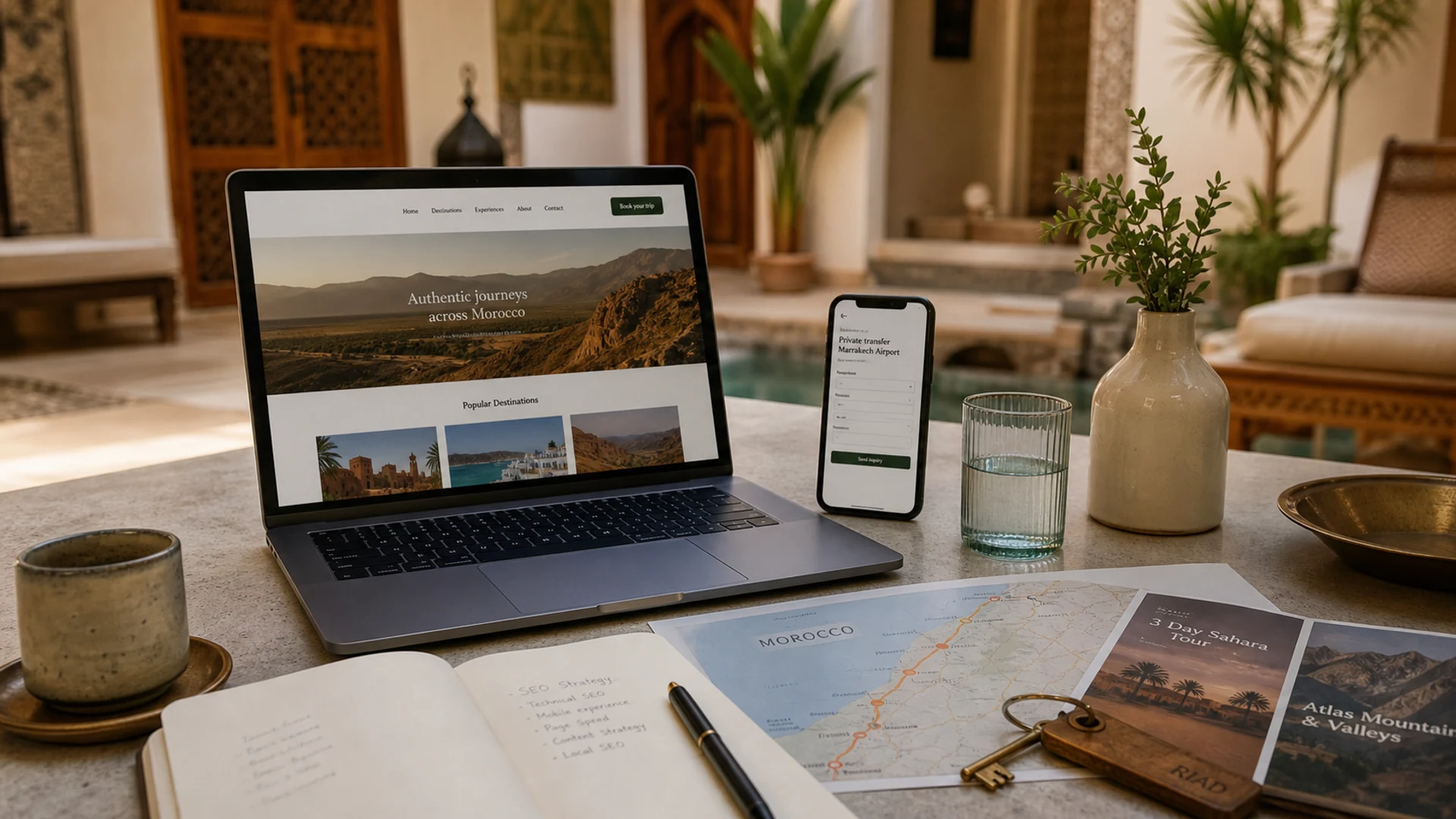
In short
Tourism SEO in Morocco works when each activity, room or destination has its own page answering what travelers check before booking (duration, price, meeting point, what is included), loads fast on mobile, shows trust signals with their source, and puts WhatsApp next to the price. Your Google Business Profile has to match the website.
Tourism and hospitality websites in Morocco compete in a crowded search landscape. Travelers compare destinations, routes, hotels, tours, drivers, reviews, photos, and prices across many tabs. Your website has to be fast, clear, trustworthy, and organized around how people plan trips.
This guide is written from the travel sites we have built and run ourselves in Morocco. If you would rather see the structure we build from, start with our tourism and hospitality websites in Morocco page.
Build pages around destination and service intent
A hotel near Marrakech, a tour company in the Atlas Mountains, and a private driver service do not need the same page structure. Create pages around real search intent: airport transfers, day trips, desert tours, riad stays, Atlas itineraries, family travel, or private transport in Morocco.
Use GEO signals naturally
Location matters in tourism search. Mention cities, regions, routes, landmarks, meeting points, and service areas where they help the traveler make a decision. This gives Google better context and gives visitors confidence that your business understands the destination.
Show trust before asking for the booking
Travelers need proof. Use real photos, clear service details, FAQs, policies, safety information, testimonials, contact options, and visible business details. For hospitality websites, room details and location clarity matter. For tour websites, itinerary structure and what is included matter.
Mobile speed is commercial
Many travelers browse from phones while already moving through Morocco. Compress images, avoid heavy scripts, make WhatsApp visible, and keep booking or inquiry forms short. A fast mobile experience can be the difference between a direct inquiry and a lost visitor.
Structured data helps search engines understand the offer
Use clean metadata, sitemap entries, LocalBusiness or ProfessionalService schema, service information, and article content where useful. Schema will not replace good content, but it helps search engines interpret your business, location, and services more clearly.
Design conversion paths for direct inquiries
Direct bookings and inquiries reduce dependence on third-party platforms. Place inquiry buttons near service descriptions, destination pages, photo sections, and pricing explanations. Make WhatsApp, email, phone, and forms easy to find without making the page feel aggressive. Our comparison of platform commissions shows what that dependence costs.
A checklist for tour and activity operators
Tours and activities are searched differently from hotels. People type the activity and the place together, then compare three or four operators on their phone. These are the pages and details that decide who gets the message. Our websites for travel agencies, tours and activities are built around this list.
- One page per activity and place. "Quad biking in the Palmeraie" and "Agafay desert dinner" are two searches, so they need two pages. A single "Our tours" page cannot rank for both.
- The facts a traveler checks before paying. Duration, start time, meeting point or hotel pickup, group size, what is included, what to bring, minimum age, and what happens if the weather turns.
- A price or a clear "from" price. A page with no price sends people back to the marketplace listing that has one.
- Safety and credentials in plain sight. Licences, insurance, guide or pilot experience, equipment. For adventure activities this is the main objection, so answer it before the booking button.
- WhatsApp first. Most enquiries in Morocco arrive there. Put the button beside the price and the itinerary, with a pre-filled message naming the activity.
- Your own reviews, linked to their source. Quote real reviews and link to the Google or Tripadvisor profile they came from. Do not copy them without the link.
- Seasonal pages published early. Travelers plan Easter, summer, and year-end trips weeks ahead. A page published the week before is too late to be found.
- A Google Business Profile that matches the site. Same name, phone, and activity categories. For "near me" and map searches, the profile is what appears, not the website. Our Google Business Profile guide walks through it.
What this looks like on sites we built
We describe what was built here, not traffic figures. Results depend on the market and on how long a site has been live, and we would rather show the structure than promise a number.
Flying Tandem: selling a high-adrenaline activity on trust
For Flying Tandem, a paragliding operator near Marrakech, the hard part was not describing the flight. It was answering "is this safe?" before the visitor left. The site puts safety content and the flight details ahead of the booking enquiry, and keeps the path from experience page to enquiry short on mobile, because many visitors are already in Morocco when they search.
Kasbah Angour: letting people inspect the place
For Kasbah Angour, a hotel in the Atlas foothills, travelers want to inspect rooms, location, and surroundings before they write. The site is organized around that inspection: room discovery, the place itself, and contact routes that stay close to the content, so a direct enquiry is easier than returning to a booking platform.
Trust Drivers Tours and Morocco Atlas Guide: route pages and guide pages
Trust Drivers Tours and Morocco Atlas Guide are two sites we built for a private tour company and a team of High Atlas mountain guides. Both follow the same structure: a page per route or circuit, guide-style destination pages, and WhatsApp as the main way to book.
Tourism SEO works best when destination knowledge, trust, speed, and conversion design all point in the same direction.
How WeReact approaches travel websites
Our tourism and hospitality websites in Morocco page sets out the booking-journey structure we build from, and the hotel and riad website design page covers direct booking for accommodation.
WeReact builds tourism and hospitality websites with fast mobile layouts, destination-led content structure, local SEO foundations, clear project visuals, and direct inquiry routes. The goal is to help travelers understand the offer quickly and contact the business with confidence.
Common questions
- How do tour operators in Morocco get found on Google?
- With one page per activity and place, real photos, the practical details and a price or “from” price, plus a Google Business Profile consistent with the site.
- Should a tour operator still use GetYourGuide or Viator?
- Yes, for discovery. A direct website serves travelers who already know you, without the platform’s commission on that booking (platform commissions compared).
- Does mobile speed matter for tourism websites?
- Yes. Many travelers browse from their phone while already in Morocco: compress images, avoid heavy scripts and keep enquiry forms short.